Friday, June 8, 2012

The Garden of Praxis: a children's story to explain sociological theory

The following was developed for an honours theory paper.  It is a children's story about praxis.  The italicised sections of text are told in more of a fairy tale narrative using the first names of the philosopher characters: Georges Hegel, Karl Marx and Paulo Freire.  The non-italicised text uses their last names and gives more description.

The Story of Praxis


This is the story of Praxis, a mythology of sorts, stemming from the human tradition of fairy tales and Pakiwaitara observable all over the world in every corner of history.  It is an example of the praxis of story telling, and a reminder that this is all we ever do as we weave the fragile webs of academia. 


“The Garden of Praxis”


In the city of logic, in the land of modernism, everything was black and white lived a man named Georg.  Georg was bored of the city and its limits, he longed for something different, something bigger and more wonderful. 


Praxis grew out of an age of modernism, where logic was the primary dogma.  It all started with Hegel, for it was his idea of synthesis, of incorporating frameworks rather than excluding those that aren't 'right', that made it possible for Praxis to exist at all.  Or we could go back further and claim that for ideas to be synthesized they must have been separated in the first place, and we could accredit this to Descartes work, a century or two before, because he is well known for severing the body from the mind.  Or we could go back further to the Greeks or to the pre-literate societies we know so little about, because as Hegel himself points out, we are repeating this cycle throughout history.  But for now we will begin with Hegel, the mender of the schism was mended by Hegel, a pioneer of holism and the open mind.


..............


One day a beautiful thing fluttered past.  It was a bright colour Georg had never seen before.  He told the people of the town, but they didn't believe him. “There is only black and white.” They said
Georg went to school and studied all the knowledge he could find.  All the modern books were black and white, but some of the oldest, dustiest books seemed to be different, they spoke of colours and plants and creatures, their pictures were strange and beautiful,  and there was a chance, Georg imagined, that they might once have been colourful. But there was nothing quite like the beautiful thing in the bright new colour he had seen flutter past.


So he went exploring. Outside the city limits he found a whole new world with a bright blue sky, filled with creatures and plants Georg had never seen before and each one seemed to have more amazing colours than the last.


Hegel, as a child in the 1700s was curious about the world, he wanted to understand it, not just in the objective way that scientists do.  He wanted to understand how his internal experiences related to what was happening in the world around him.  He read books and poetry, he studied the ancient philosophers and the contemporary, he watched the French revolution unfold and the siege of Napoleon and he sought to understand the intricate patterns of humanity, of mind and nature, the subject and object, of psychology, the state, history, art, religion, and philosophy. 

......................

Georg went back to the city.  He tried to tell the people about the amazing world, but they did not believe him. “There is only black and white” They said.  “If there was colour, then our city could not possibly exist.”  That did not make sense to Georg.  He knew that it was possible for black and white and colour to exist all at the same time.  So he went back outside the city limits and he asked the creatures there.  The creatures said nothing, so Georg watched and observed.  He saw how the rain seemed to make the plants glow, he saw how the smaller plants must grow into large trees, he saw the seedlings and he thought “If I could bring this into the city, then they would understand.”

So Georg went about collecting the seeds of all of the magnificent plants, the trees and flowers and the sweet fruits.  He gathered them together and brought them back to the city of Logic.  He found some bare ground that no one was using and he dug it up, mixing the black and white, turning it to grey.  He planted the seeds in the ground and watered them, like the rain.  And he waited.
The people stood around and they said “This will not work.”


Georg waited and waited, white the people called him names, convinced that he was a fool.  They forgot about Georg and his astounding ideas that must be crazy and they went back to their lives and their jobs, meanwhile Georg waited, and waited and waited.  Nothing happened.  He went back to the amazing world outside the city and he watched and observed more.  He saw how the leaves would fall from the plants and turn brown on the ground, he wondered if this ground was different to the ground in the city because of the leaves falling for so long.  He put mounds of leaves into a bag and brought them back to the city of Logic.  He sprinkled them onto the earth he had dug up and he watered them again.  The earth turned brown and still he waited...
One morning Georg noticed he was not the only one watching and waiting, a group of children gathered round, they pointed at the ground and smiled, and talked to eachother in hushed voices.
Georg looked closely at the earth he had so lovingly prepared and saw, to his utter joy and amazement, a tiny shoot emerging from beneath the dirt and leaves in a bright, beautiful colour.
The people gathered round again.  Some still said he was crazy, some moved quickly along and went back to their jobs, some were interested and they stood with Georg and watched the miraculous garden grow.  Some people became angry and yelled at Georg, “it is all an illusion, an illusion.” they said “This is a waste of time, we all know what is really real and it is black and white.”
But Georg didn't listen to them.  He said “look, we have room enough in this city for the black and white and for the colours.  We don't just have to have one or the other.” And he watched and waited, as more and more shoots began to grow and more and more colours emerged.


Hegel became a professor at various universities and wrote books about his ideas.  Throughout his life he had witnessed much conflict between people, countries and ideas and he discovered a solution; very different ideas could be incorporated together in philosophy, contradictions could co-exist, and indeed, all sides of a story would be necessary for absolute knowledge to exist.

...........

Many years later Karl came along and saw the beautiful garden that Georg had created.  It had grown wild and some people liked it, others said it was a mess and that the city should go back to being black and white. 
Karl sat in the garden and he thought and thought.  He thought about all the good work Georg had done in creating the garden and bringing colour and new life into the city of logic and he came up with a name for the garden.  “This is the garden of Praxis!” He said, “Because this garden was created through the great ideas of Georg, combined with his real work.” He thought of all the scholars sitting up in the black towers of logic, thinking all day and never doing anything.  “What use is that?” He wondered.  He thought of how the people in the city lived, spending all their time working hard and never being happy, and he had an idea “If we all grew these gardens, we would have enough sweet fruits for everyone to eat, the people wouldn't have to work all day, and they could be happy and enjoy their lives.

Karl tended the garden, and other people helped him.  Together they explored the world for new seeds so they could plant more seeds of sweet fruit trees and vegetables, in every colour and flavour imaginable into the garden.  They dug up more land and made the garden bigger. 
Along came Marx, a man from the upper classes who chose to spend his life campaigning for the working class.  Marx is well known for many things, particularly for the role of his ideas in the Russian revolution and other similar movements around the world.  It was he who re-created the concept of Praxis, originally a Greek word related to action.  Marx saw Hegel's Dialectic as revolutionary in it's ability to include many different perspectives previously ignored by people in power.  He borrowed Hegel's concept of integration and also Feuerbach's idea that the physical world and material satisfaction are important.

Marx was a very practical man, he is well known for saying “The philosophers have only interpreted the world in various ways—the point however is to change it”. To Marx, theory and philosophy were useless if they did not seek to change the world, and action, without theory could be futile. To remedy this Marx constructed Praxis as the synthesis of theory and praxis.  Praxis was about taking philosophy out of it's lofty tower and putting thoughts to work in the real world in order to change the world.  Praxis was revolutionary.
When Karl was very old and tired, he handed the garden over to his friends and followers.  One of them was Paulo. 


............

Paulo liked what Karl had done with the garden, and he had been happy to help him, but he also had ideas of his own.  “We have been growing so many plants in this place.” He said to the other gardeners, “But not everyone in the city is able to eat them.  Why don't we teach the other people in the city to grow their own gardens, with the fruits that they will enjoy, then everyone can have enough delicious food to eat and enjoy their lives.”  “How will we do that?” asked the other gardeners, “What if they don't want to learn?”  Paulo thought about this for a while.  He saw a boy on the street and he asked him “Little boy, what is important to you?  The little boy said “I like to play sports with my dad.” Paulo nodded, “Does he play sports with you enough?” “No,” said the boy, frowning “He is always working so that he can feed our family.”  Paulo was very interested in this, he asked the boy “What if you and your father, and your whole family could grow your own food together, delicious food like the fruits in this garden, and then you would all have more time together and spare time to play sports.” The little boy looked at Paulo and smiled, then he ran off to find his father.

Paulo went back to the other gardeners.  “I have figured it out!” He said.  “This is the way we can teach people – we must find out what they really want to learn and why, and then we can help them to learn it.  This is the best way to teach because we can do it with love and humility, with respect and creativity, and through this we can help people to think for themselves, to choose their destiny and to grow their own food.  Together we can turn the whole city of Logic into a garden of Praxis!”
Freire drew on Marx's ideas.  He envisioned society as one liberated through education.  He didn't agree with the kind of education he saw in schools, where children were treated like knowledge banks, being deposited full of information.  He didn't see education as something that should be instructed or forced on people.  He believed in learning empowerment.  He thought that if people could learn about what they were passionate about they would learn much more quickly.  He thought critical consciousness was necessary in real learning and communication.  He wanted to help people in developing the ability to act  reflect on action and act in light of their reflection.  This is his action-reflection cycle.

Freire believed that through praxis human beings create and recreate society.  He thought that praxis required self determination, intentionality, creativity and rationality.   He developed a system for people to learn about the world through a process he called 'dialogue'.  He said   “Dialogue cannot exist, however in the absence of a profound love for the world and for men.  The naming of the world, which is an act of creation and re-creation, is not possible if it is not infused with love.  Love is at the same time the foundation of dialogue and dialogue itself. It is thus necessarily the task of responsible Subjects and cannot exist in a relation of domination. Domination reveals the pathology of love: sadism in the dominator and masochism in the dominated.”  Freire's ideas have been used, with great success in Cuba, with their literary campaign, and other places around the world.  Although they have amazing potential to educate people they have not gained much popularity in the Western world, probably because they create a gateway for people to become more political which is something governments would find difficult.


So what is praxis?

Praxis is the union of the mind and the body, of thoughts and actions, of theory and practice. 
Praxis is empowering and transformative.  It is the process through which philosophy can impact reality, to create positive change.

Tuesday, May 22, 2012

What am I doing and where am I going?

When I first had this idea for a PhD topic I was pretty excited about it.  Now I'm at that natural point, which occurs early on in any thesis, of wondering what the hell I'm doing.  Defining my topic is tricky.  I want to look at free food, at food activism, at food democratisation (what does that mean?)... what's all this about food sovereignty?  I've come across twenty or so books published in the last three or four years with this in the title... and pretty much nothing on food democratisation.

Before I go completely insane and words stop having any coherent meaning at all I need to re-capture that excitement.  What was it that inspired me?  Who do I want to interview?  What is it, particularly about 'free food' - outside of the monetary system that is so special when there's lots of really neat local ventures that use ordinary money that I could also be tempted to look into?

Kaiwhenua organics down the road, Mike who sells his organic milk raw and Aaryn who bakes sourdough bread in the traditional wood-powered bakers oven he built himself would all make really awesome case studies, and there's no reason why I couldn't write about them in the future.  But I probably need to stick to the 'free-food' concept lest my thesis becomes too sprawling.

So what is free food?  Although I don't like the sentiment of they saying "There's no such thing as a free lunch", I agree that nothing is really free, that is, everything is interconnected.  Food has to be produced by someone/something drawing resources from somewhere else - even wild foraged food is produced within and by its eco-system.  I want to focus on food outside of the monetary system, but community garderners may spend money on garden supplies.  Even freegans subsisting entirely out of supermarket dumpsters are likely to use money for petrol get to the dumpsters - if they're car-free they may need bike repairs - there are very few people in industrialised capitalist society that don't use money at all.

I want to focus on practices that either generate food (largely) outside of the corporate food system and aren't bought or sold using conventional currency or that glean food that would otherwise be wasted, and, therefore, do not contribute to the corporate food system.  I'm interested in concepts such as abundance, scarcity, freedom, community and participation - and I'm interested in what people involved in this sort of thing think and their lived experiences.

Well, that clarifies things a bit.  I suppose, in looking at the literature, there's not much written specifically on this topic - especially in New Zealand - and so everything I'm reading is sending me in a slightly different direction which makes my head spin and my brain turn to jelly.  Maybe it's time to invest in some ginkgo tea - or better yet - find a ginkgo tree and forage.

Saturday, May 12, 2012

The Food Bill - not what you think?

It sounds so ominous - a piece of legislation that has attracted more attention in New Zealand in recent months than even our rushed through anti-terrorist and anti-piracy debacles.  When I first read about the potential for this legislation to criminalise the gifting or bartering of home-grown vegetables and home made jams or of seed saving and WWOOFing I was a little bit terrified.  I even tried to read the legislation to see if all these accusations were true or just some kind of fast-spreading internet fear virus perpetuated by the scare-mongering media.  Somewhere in the hundred or so nonsensical pages I discovered that I can't actually read legislation.  So I waited and read the things people posted on Facebook, sometimes anxiously and sometimes cynically, depending on my mood.


However, I've just read an email that significantly altered my perceptions.  Maybe this is old news and my passive way of receiving information is not particularly effective, either way, it's news to me.  This was one of the email attachments.  So, if we can believe anything a Govt. website says at face value, the current food legislation makes sausage sizzles and bake sales illegal (somewhat ineffectively), whereas the new Food Bill, far from stripping our food sovereignty down to its knickers, actually frees us up, legally, to do what we were already doing anyway.  Apparently: "The Food Bill takes a flexible, risk-based approach to the production of safe food" and appears to focus on commercial food manufacturers and the safety of the food they produce.  That doesn't sound too bad (especially if you're not a food manufacturer).


So what about growing food at home and giving it away? 

5. What’s not covered in the Food Bill?

The Food Bill does not cover food grown at home or made for personal consumption, any food given away or shared with anyone.
It is an age old Kiwi tradition for people to grow food for themselves, share their excess homemade food with friends or neighbours, or to hold pot luck dinners. The Food Bill will not prevent food being given away or shared with anyone, including food grown at home.
Technically bartering is counted as trading under the current food bill, although Govt. expresses that the bill is aimed at commercial bartering turning a blind eye to all that under-the-table zucchini swapping that we are going to do anyway without tithing to the IRD.


Now to the nitty gritty.  We all know that seed saving/swapping and WOOFers are really neat and important (at least in my opinion), so is this law actually a threat to such lovely activities?  That's an interesting one.  It turns out it was, originally, and maybe it's only since we all kicked up a fuss on Facebook and started signing online petitions that the bill has been altered:


9. Will the Food Bill cover seeds or WWOOFers?

No. The sale or trade of seeds for planting and providing food to Willing Workers On Organic Farms (WWOOFers) was unintentionally captured in the original Bill. The Minister for Food Safety has asked MAF to ensure food producing plants, plant material, seeds and providing food to WWOOFers are not covered. The change will be made in a Supplementary Order Paper (SOP) when the Bill is again considered by Parliament.

Unintentionally captured my ass.  I bet there was someone who had a vendetta against these unregulated free-spirited activities - or maybe that's just my paranoia kicking in.  Either way, they're safe for now.  On the subject of paranoia, I was suspicious that all this food tightening was in line with US law as part of a forecasted free trade agreement.  Who know, maybe it is, but apparently it's not some kind of World Trade Org thing: 

15. Is the Food Bill about meeting obligations under the World Trade Organization (WTO) agreement and obeying the Codex Alimentarius?

No. The Food Bill is the result of our own Domestic Food Review. The Bill is not copied from or influenced by the legislation of any other country. It has been written in New Zealand for all food sold and made in New Zealand, whether it is for the domestic or export market.

So, if we can trust the good old Govt. it doesn't seem too scary after all, influenced, so it seems, by online participant driven activism and public outcry.  Or maybe it's all a scam and they're just telling us what we want to hear.  Until I learn to read legislation I will never know.

Friday, May 11, 2012

Collaborative Consumption

When Ray Anderson, founder and CEO of Interface, the worlds largest commercial carpet company, decided to go environmentally friendly he also realised he had so stop selling carpets - and rent them instead.  This seemed to work out well for their customers who had the carpets serviced and replaced when they got old and meant that Interface could take the old material and recycle it into fancy new carpets.  What a wonderful idea.  Last year on a visit to our local recycling and refuse centre, Xtreme Waste, I was struck by how much waste is created by corporations - like Coca Cola with their plastic bottles - and yet the responsibility and cost of their disposal is redistributed to people and the environment.  Why aren't these companies made responsible for the waste they manufacture and market?  Imagine a world where it was illegal to sell a plastic bottle, one simply rented the plastic for a period of time, consumed the content and returned it to its manufacturer to deal with at their cost.


I'm currently reading What's Mine is Yours: The Rise of Collaborative Consumption by Rachel Botsman and Roo Rogers.  It's a damn good book documenting and promoting the development of a new consciousness around consumption where possession and ownership are overlooked in favor of the use and usefulness:

"The relationship between physical products, individual ownership, and self-identity is undergoing a profound evolution.  We son't want the CD; we want the music it plays.  We don't want the answering machine; we want the message it saves... in other words, we want no the stuff but the needs or experiences it fulfulls.  As our possessions "dematerialize" into the intangible, our preconceptions of ownership are changing, creating a dotted line between "what's mine," "what's yours," and "what's ours."  This shift is fueling a world where usage trumps possession." (Page 97.)
This book explores a number of examples including tool lending libraries and the like, car sharing, clothes swapping, spare room rentals, and land-sharing networks (of particular interest in my line of study) where people who have unused land allow people who want to grow food to garden on said land and the produce is shared.  It also briefly describes the beginnings of some of the bizarre practices (now so common they are part of the cultural goldfish bowl water that we barely notice) like credit cards (to spend all they money you don't have on things you don't need) and rented storage space (to house all the stuff you don't need, but can't bare to give away.)  The latter, according to this book, has grown exponentially since it's post WW2 creation, so that every person in the United States could comfortably stand in the amount of rental storage space the US has.  Sometimes when I read about these ridiculous things I want to start quoting the Cheshire Cat and hanging from the rafters.  But when I read about the changing consciousness around ownership it gives me tingles and warm fuzzies. 

Monday, May 7, 2012

Progress

Well, that might be an overstatement.  I officially enrolled in a PhD at the start of April.  So far, I've read one book, Waste: Uncovering the Global Food Scandal, by Tristram Stuart and taken quite a few notes that may or may not be relevant and useful but are definitely interesting.


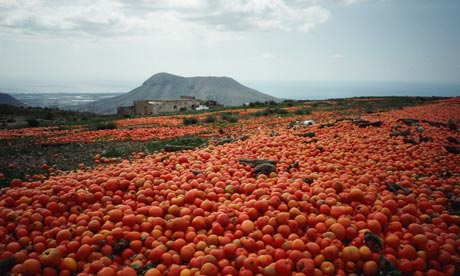
So basically, from farm to table, the developed world wastes around 50% of all the food we produce.  That's pretty scandalous.  Stuart comes across as a pretty frugal sort, and, as a freegan/journalist he has seen the inside of a few dumpsters in his time.  He doesn't like waste.  That's for sure.  I don't like the thought of wasting billions of tonnes of perfectly good food while more than a billion people starve in this world, and while not cleaning your plate won't do much - directly - to influence the starving children in Africa, Stuart argues that conspicuous consumption in the West and our great hoarding of surplus means there is less food for the poor to eat on the global market.  I'm not 100% convinced.  Yes, this system is F#%*ed but buying less and wasting less might just lead to producing less globally - rather than the equal redistribution of rations.  If developed countries stopped buying so much of the world's grains there would be less money in that industry and poorer nations might well focus on making cell phones or bio fuel or something else.  As I have heard many times: we don't have a food shortage, we have a distribution problem.


While visiting friends up north who has massive permaculture gardens I was impressed with his attitude to abundance and waste.  "We don't have waste." Mike said, throwing a bunch of edible vegetables in the the scrap bin.  "Everything that doesn't get eaten goes back into the soil."  I liked that.  I enjoy abundance.  That's a pretty human thing, isn't it?  Scarcity scares me.  I reckon animals behave much better (for the most part) in states of abundance - there's generosity and no need to fight over scarce resources.  That's the feeling that I get being at Burning events, where no money is needed and there's a culture of gifting.


Abundance can make people behave irrationally - wastefully - indulgently, but it can also bring out the best in people.  Stuart describes “…the ceremony known as ‘potlatch’ observed among native peoples such as the Kwakiutl, in the American north-west, Canada and Alaska.  In the potlatch ceremony, chiefs  invited guests from neighbouring villages and gave away box-loads of fish and whale oil, dried fish, heaps of blankets, furs and ceremonial masks.  Fish oil would be poured onto the fire or guzzled  in competitive feasting events. (Stuart, 2009, p.176)."  Despite the appearance of irrationality, potlatch is said to have  benefited the society as a whole.  Similarly in Melanesia and New Guinea the ‘big man’ encouraged extra production in order to give more food away, generating more food production and redistribution between villages.  Through overproducing the contemporary food industry resembles a potlatch – resulting in an epidemic of obesity – yet much of the food is not redistributed to those who need it most.


Over-producing food also means that when crops face devastation, rather than suffer a famine, developed countries simply waste a little less than usual.  If this kind of abundance wasn't over-exploiting limited natural resources and contributing to environmental destruction - or so unevenly distributed - it would be a pretty sweet deal.  If we could produce food in a more sustainable way, distribute it more evenly, and efficiently recycle the waste in the ways that Stuart suggests (his preferred options are in this order: Pig feed, bio gas, compost) then would producing more than we can eat, and the resulting abundance, be such a bad thing?

Monday, December 19, 2011

Oh, hi

So.  I was going to do a PhD.  Then I wasn't.  Now I am.  It's a long and complicated story which I won't go in to, but as a result of this journey I had to completely detach from the idea of doing a PhD... and from any motivations that I might have had based on ego.  If you grow up in a family like mine - with three previous generations of PhDs, with a mother, grand-parents and great grand parents who are/were academics, it gets kind of entrenched.  It's like this is what you're supposed to do to be a satisfactory individual, and if you don't, well... maybe you just should.  Here's a picture of the lotus temple at the last KiwiBurn.


Anyway.  So it would sound pretty cool to say "I have a PhD", but it's not really a good reason to spend three/four years of my life pouring my energy into research through an institution which I don't really believe in, which is probably out-dated, now that the internet exists.  I don't believe in gate-keeping knowledge, I believe it should be free.  I don't want to be an academic or spend my life institutionalised (although it has been most of the time so far).  Here's a blurry photo of the temple burning:


The only reason I'm wanting to do this research now is because I love my topic and I found out the other day that my scholarship has been extended, and I now have two awesome supervisors, so all I need to do is get enrolled.

Sunday, July 10, 2011

Thought for food

I'm currently in the process of applying to enroll in a PhD, a much more difficult task than I imagined as it seems I'm expected to know, more or less, what I'll be doing for the next 3 - 4 years.  The more I think and learn about 'free food' the bigger the topic gets and I don't really want to limit it - because it's all so interesting!

I'm not sure if anything is actually free... there is always energy going into producing food, and often energy exchanged for it.  Sometimes that energy is in the form of formal currency, sometimes it is in other forms such as labor or other goods.  I don't know if food that is given away with nothing expected in return is actually the main kaupapa for what I want to research, but I do want to focus of food that's outside the corporate food industry.

This is the outline I have come up with so far:


Contemporary grass-roots initiatives focussed on the democratisation of nourishment or ‘free food’ have become increasingly more common in recent years in correlation with increases in food prices and growing awareness of social, cultural, evironmental and ethical problems with the global corporate food system (Hassanein, 2003; Germov & Williams, 2004; Scrinis, 2008).  The intention of this research is to analyse a collection of these initiatives in light of the understandings around the food systems in advanced capitalist countries of some of the people involved.    The concept of global food scarcity has long been held as a common lay belief, although, as early as the 1970s criticism emerged arguing that the myth of food scarcity has been perpetuated by the corporate food industry, which relies on it to sustain market value (Moore LappĂ© & Collins, 1977).  This system has been shown to be excessively wasteful, as over-produced food is discarded rather than flooding the market, as Colquhoun (2007) describes: “between 30 and 40 percent of the food produced in Britain is never eaten, and the amount thrown away has increased 15 percent in the last decade” (p.372).  Stuart (2009) estimates that in the United States around 50 percent of all food is wasted.  As Shantz (2005) states: “It is not surprising that within societies of mass consumerism, consumption practices would be key areas of struggle. Indeed the rise of mass consumerism has given rise not only to corresponding criticisms of consumerism, but to movements organizing to challenge regimes of mass consumption” (p.1). Along these lines freeganism[1], food foraging, guerrilla gardening and community gardens have sprung up and grown in recent years, creating their own informal economies as alternatives to participation in the corporate food industry. 

http://atyoursenses.com/2011/06/23/wasted-food-billions-of-kilos/
While there has been considerable recent research into freegan activities such as dumpster diving, a practice and philosophy that has grown widely in recent years (Rush, 2006, Darrell, 2009, Shantz, 2005), many other activities, organisations and practices that could be classed as being situated within the wider 'free food movement' have yet to be explored.  These include food foraging networks, community gardening, land sharing programs, renegade or guerilla gardening, free stores and so on.  While some research had been undertaken into some of these (Shantz, 2005; Rush, 2006; Hassanein, 2003), others are yet to be explored from a sociological perspective or similar social science paradigm.  This research will fill in some of the gaps in the literature regarding these concepts as well as explore the connections between these different practices, particularly focusing on shared values and philosophical views.  This research can also be considered socially important due to the absolute necessity of food and the flaws in the current global food system which have led, on the one hand, to excessive food waste and simultaneous starvation and malnutrition (Stuart, 2009).  This imbalance is a serious social justice issue and this thesis intends to explore grass-roots and community-based alternatives which work outside the market system and attempt to fill some of the gaps it creates. 
This research will employ a variety of relevant research methods in order to undertake comparative case studies in New Zealand and internationally, predominantly, in advanced capitalist societies where food is not necessarily scarce but where a false scarcity is created by the market.  The internet, with its immense potential for information sharing and communication, is an important vehicle for the formation and growth of food democratisation initiatives.  Therefore, as part of this research, online initiatives will be explored alongside face-to-face initiatives.

Key arguments:
  • 1. The global corporate food industry creates a state of false scarcity in order to maximise profits which means that nourishing food is less accessible to people of low socio-economic means.  
  • 2. Food democratisation initiatives create abundance through growing food or redistributing food that would otherwise be wasted
  • 3. These initiatives can be considered part of a wider social movement resisting global capitalism through proactive, constructive, productive grass-roots food activism

Research questions
  • What is the relationship between global capitalism and food?  
  • How does the global corporate food industry create food scarcity in order to maximise profits?
  • In what ways have people responded to the inequities within the global distribution of food (commodity chain and food scarcity)?
  • What is the relationship between the democratisation of food and food scarcity?
  • What groups and initiatives are involved in the democratisation of food?
  • What political and ethical values do different food democratising initiatives share (and what values differ)?
  • How can these micro level grass roots initiatives create wider social change? 
  • How can they be supported or set up?
  • What motivates the initiatives at the micro level?
  • How can the discourses of these initiatives contribute to the critique of global capitalism?


[1] Freegans live on food that would otherwise be wasted, for example, food found in supermarket rubbish bins.